
Stains on the walls, flaking paint, a musty smell in the wardrobe or windows dripping with water every winter morning: damp is one of the most common problems in homes, especially on ground floors and in semi-basements. It spoils finishes, damages the structure over time and makes indoor air less healthy.
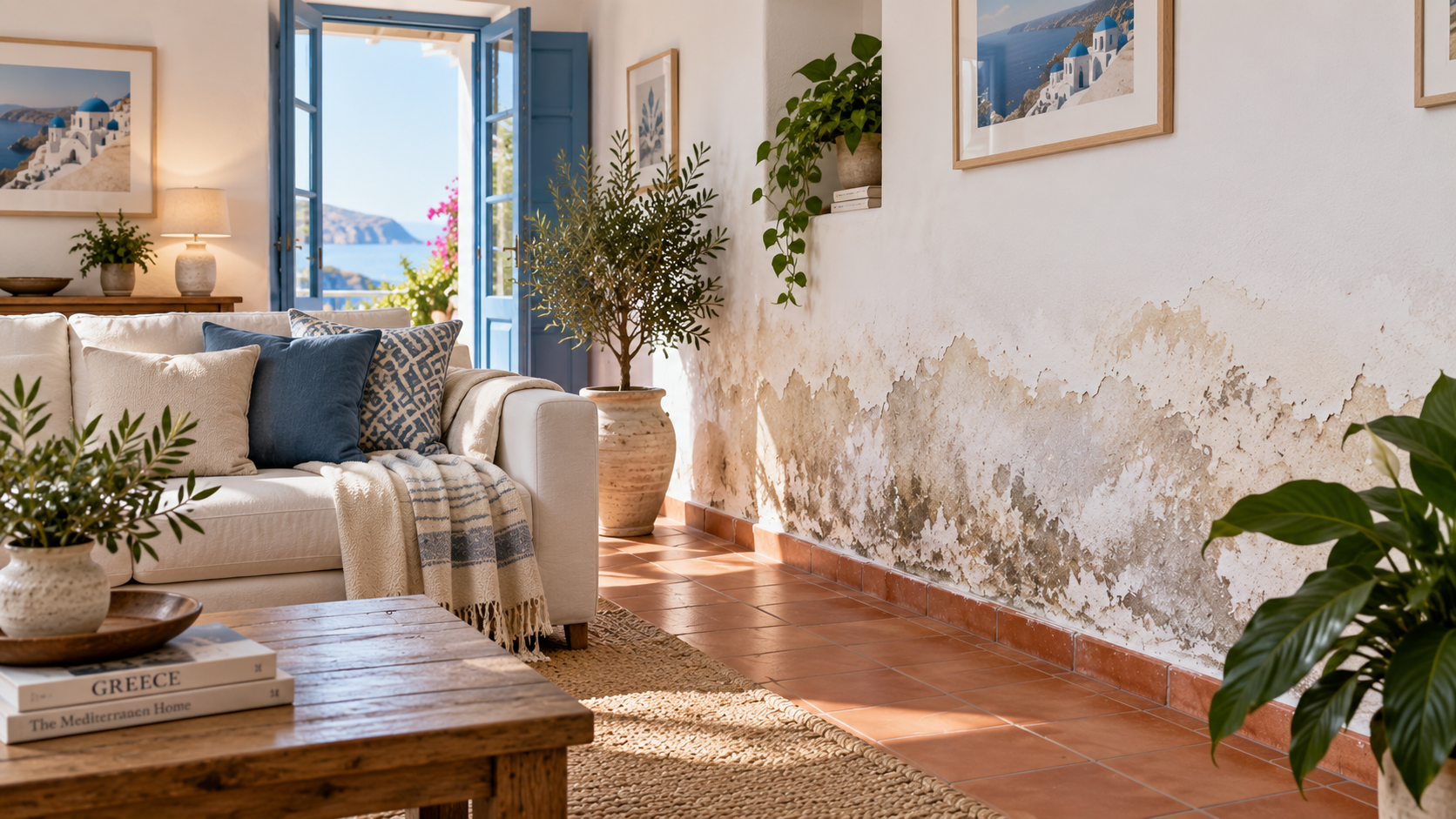
The good news is that damp almost always has an identifiable cause. In this guide we explain how to measure it, how to recognise the warning signs, how to tell condensation apart from rising damp and which solutions really work in each case.
What is a normal humidity level indoors?
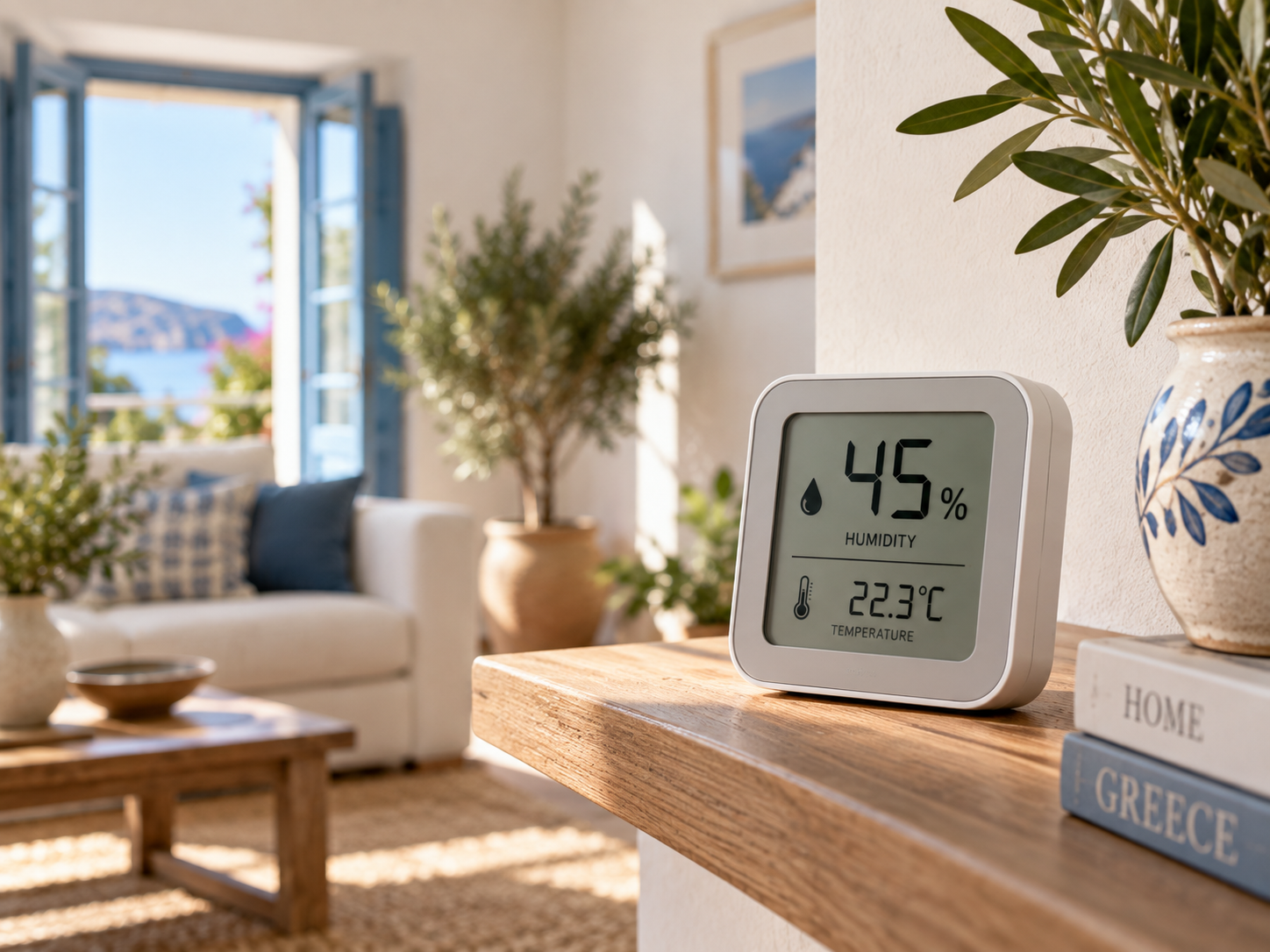
For comfort and health, indoor relative humidity should generally stay between 40% and 60%. Short-lived peaks, for example after a shower or while cooking, are normal. The problem starts when humidity stays above 60% for days or weeks: that is when mould, condensation and damage to materials begin to appear.
How to measure humidity correctly
- Use a simple digital hygrometer: it is inexpensive and measures the humidity of the air.
- Place it in a representative spot of the room, away from windows, radiators and the bathroom door.
- Take readings at different times of day over several days and look at the trend, not a single value.
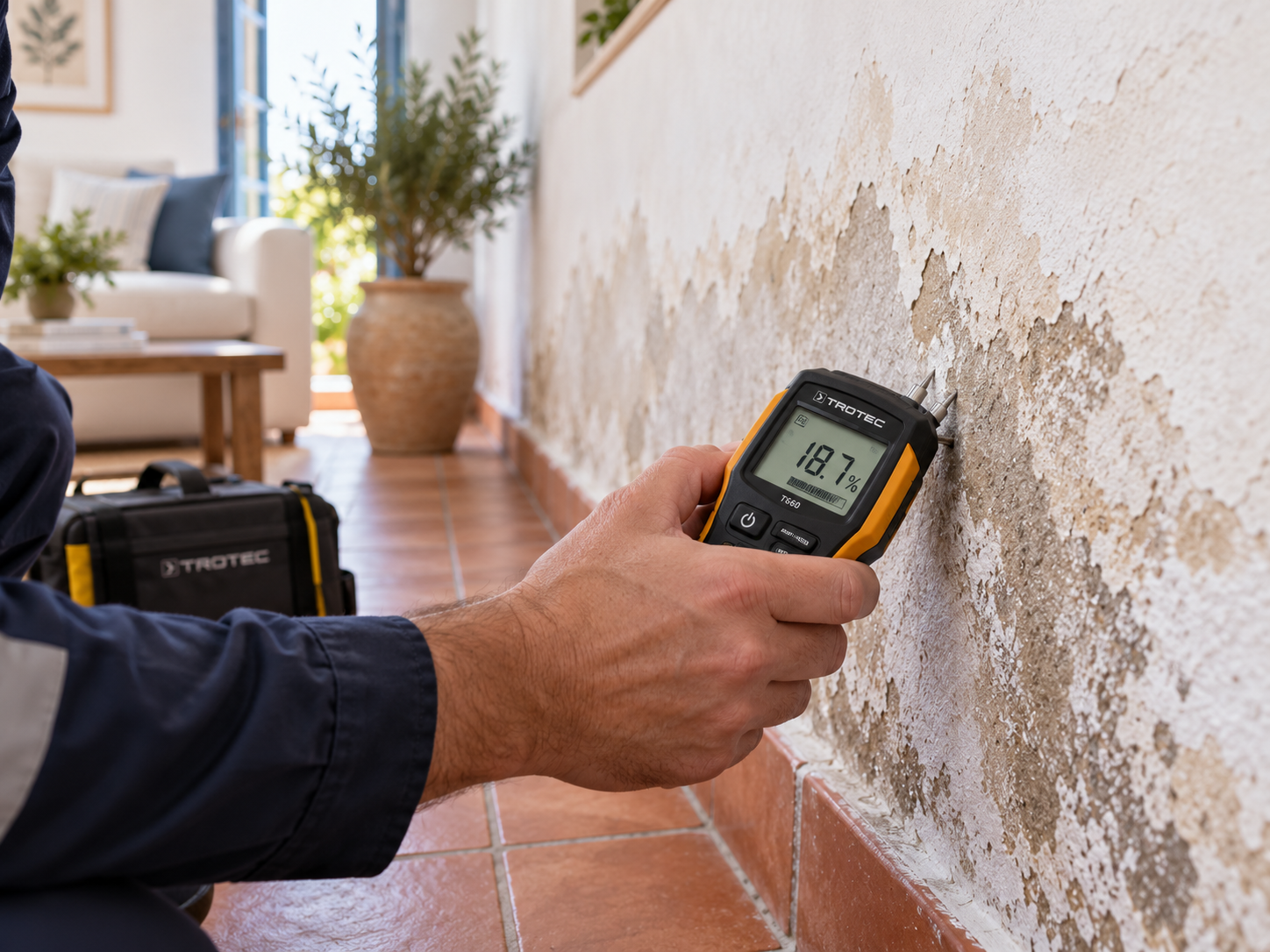
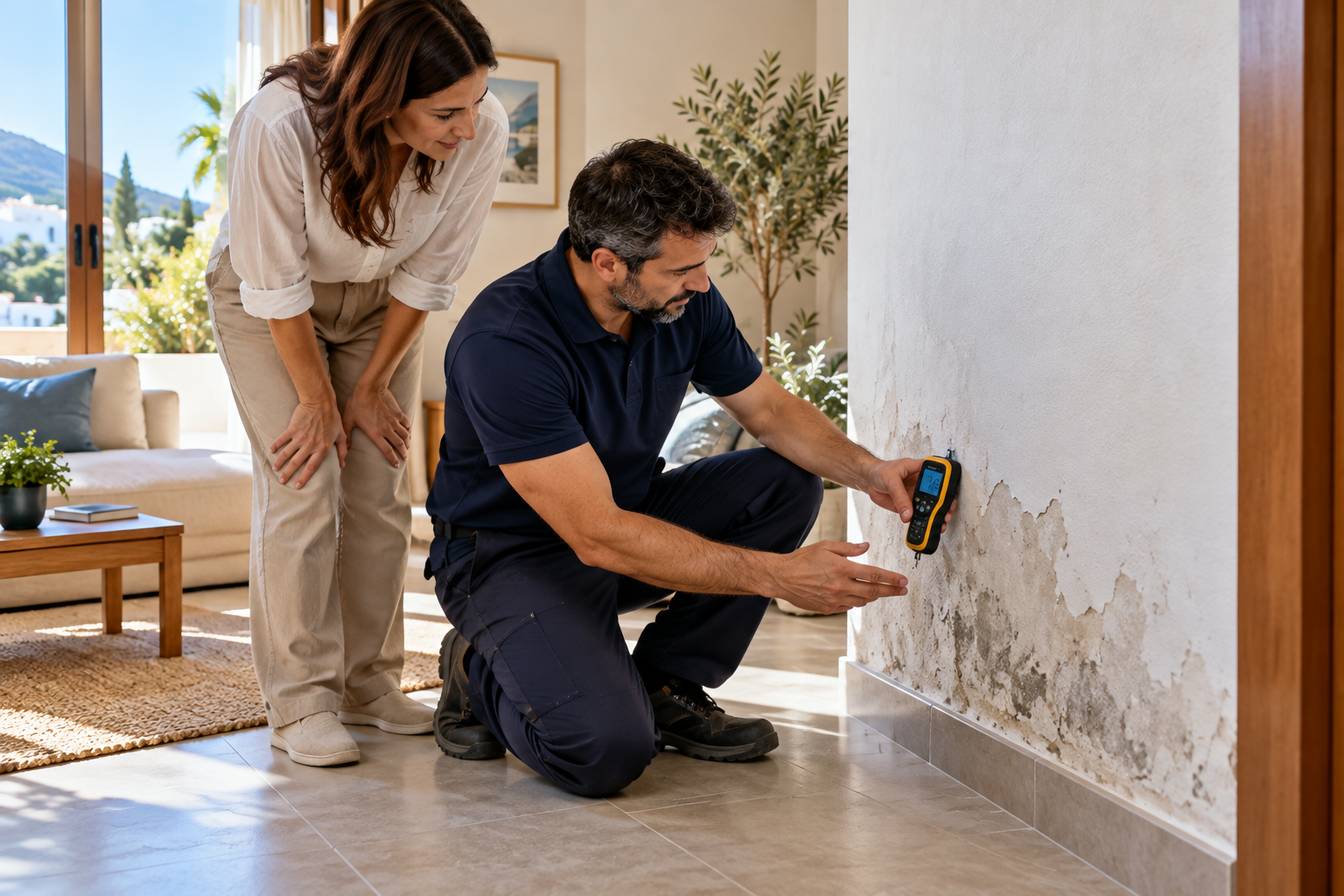
- Remember that air humidity and wall moisture are two different things: if the damp is inside the wall itself, a professional moisture meter is needed to measure it.
The warning signs of damp
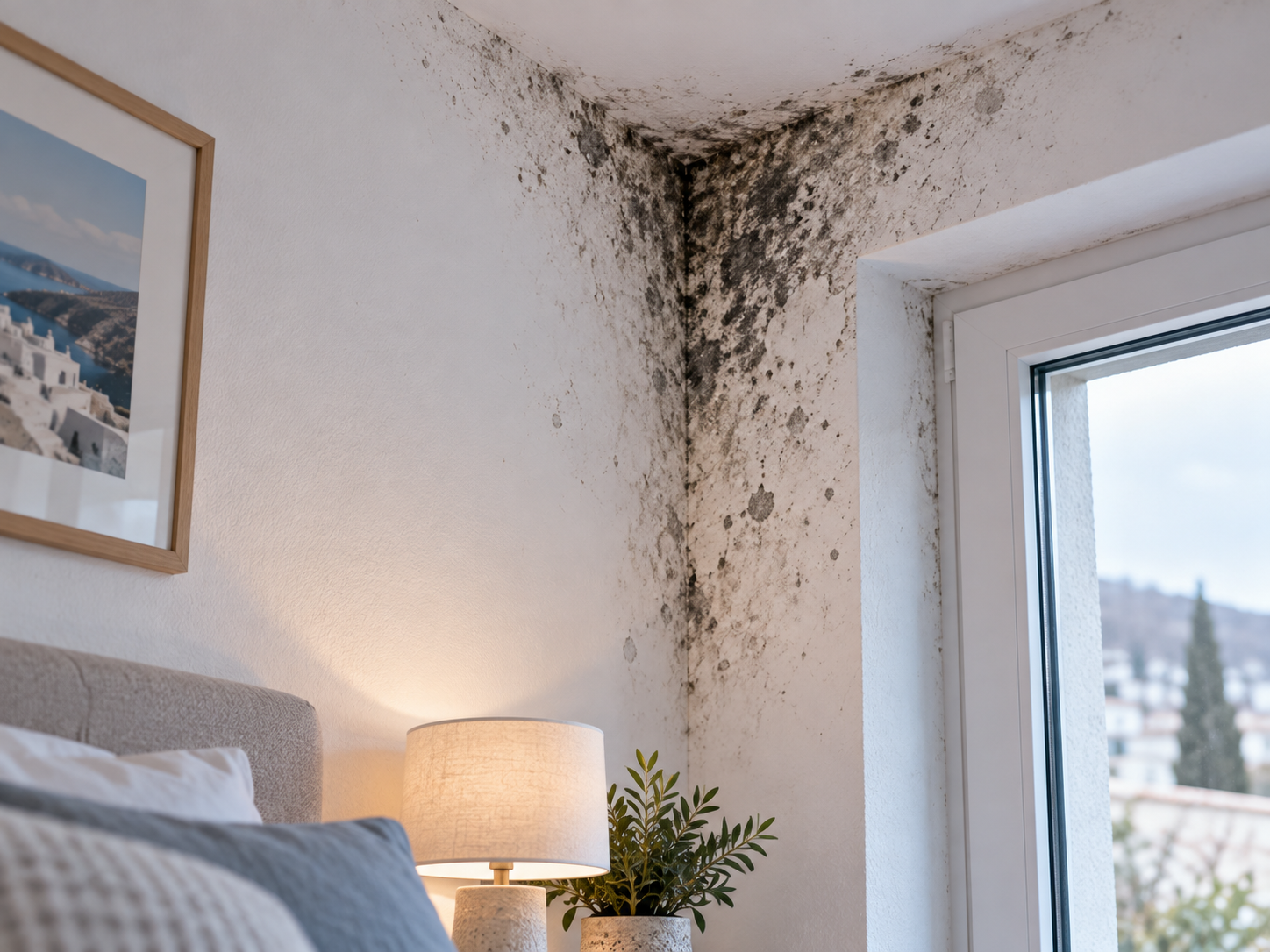
- Mould and dark stains: black or greenish spots in corners, on ceilings, behind furniture or around windows.
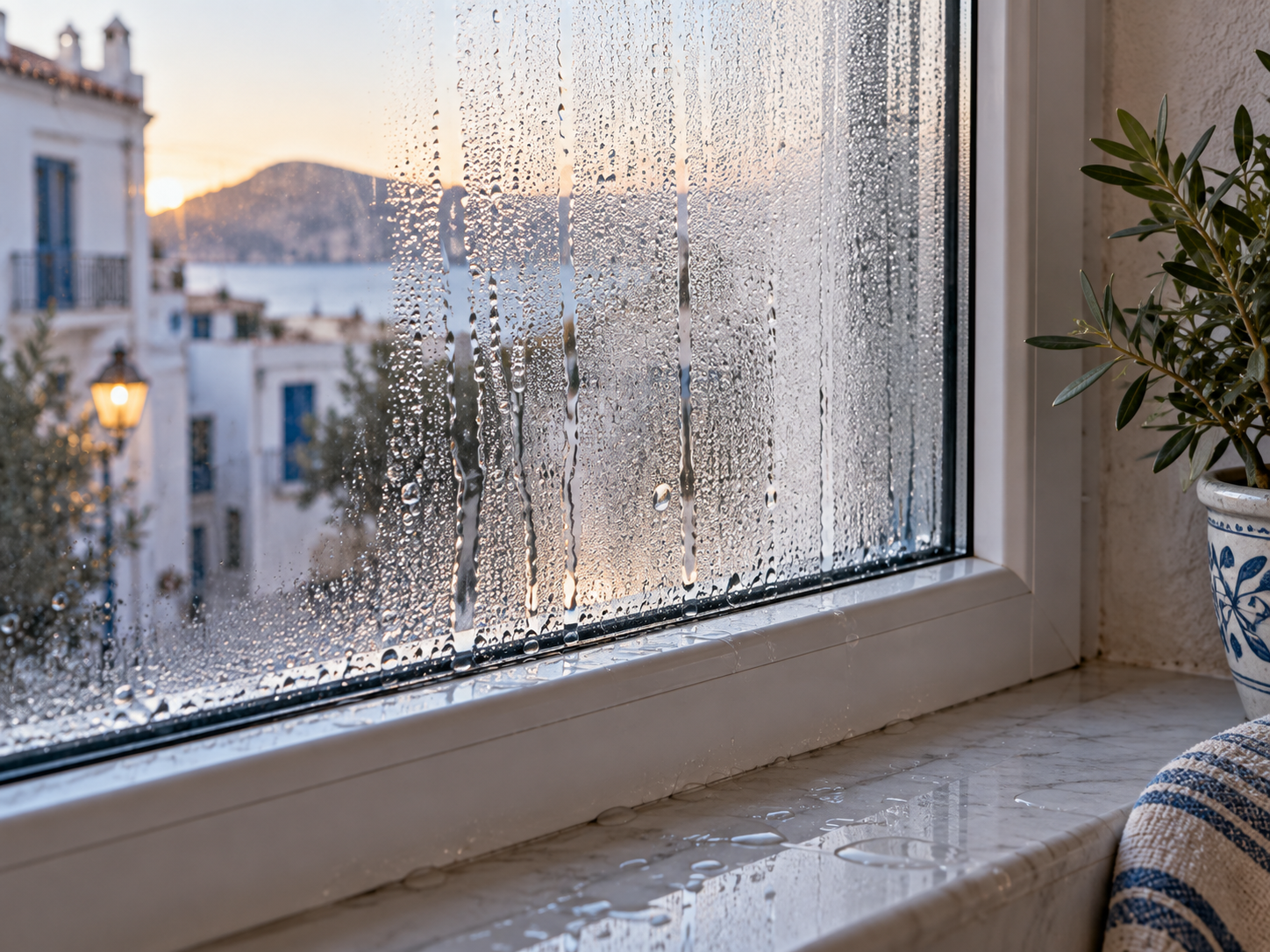
- Condensation on windows: droplets on the glass, especially on cold mornings.
- Peeling paint and swollen plaster: wallpaper that lifts, plaster that crumbles or blisters.
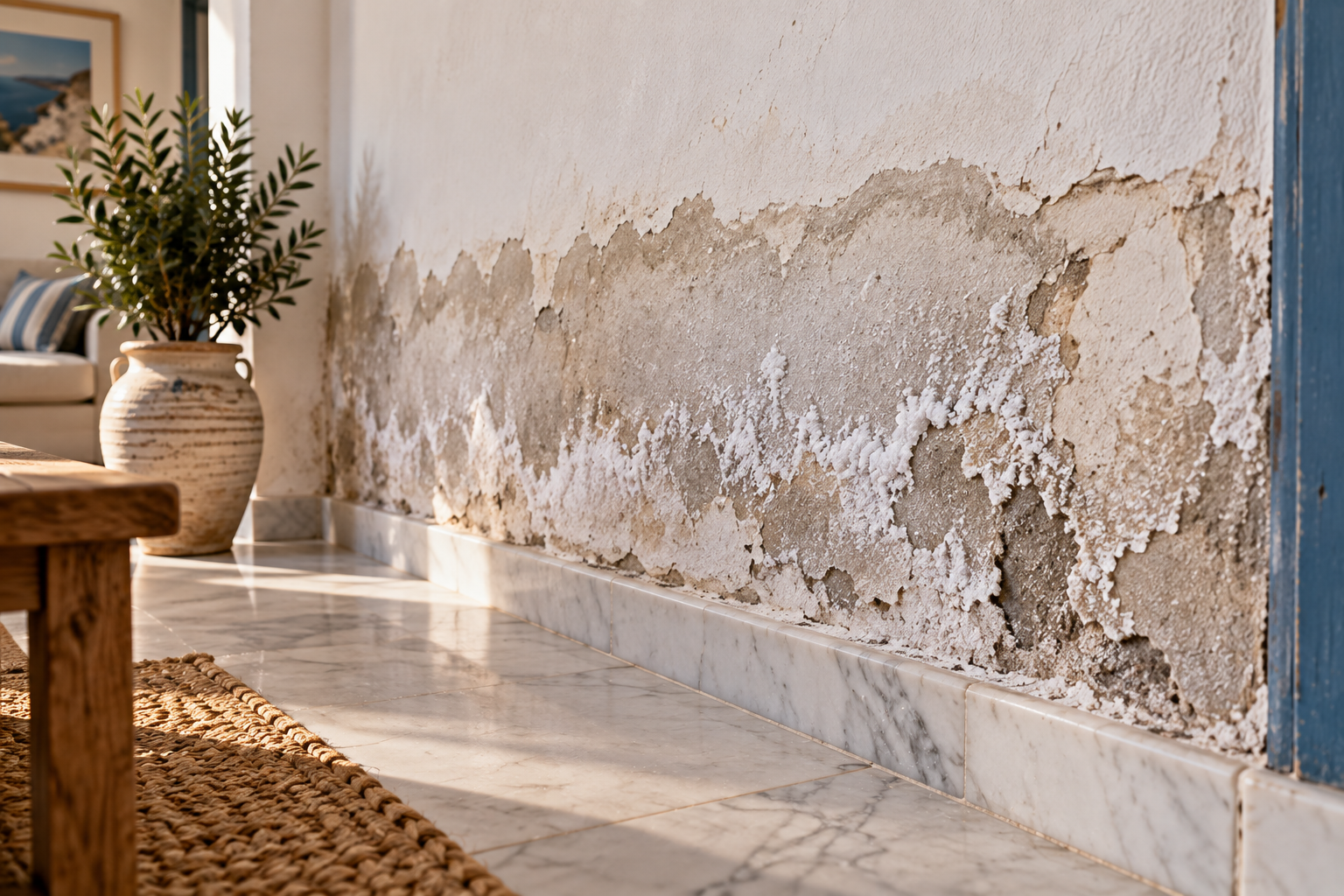
- White salt deposits (efflorescence): a powdery white crust, typically along the lower part of the walls.
- A tide mark near the floor: a stained band that rises from the skirting up to roughly one metre.
- Musty smells: in wardrobes, storerooms, cellars and rooms that are rarely aired.
The main causes of damp
1. Poor ventilation
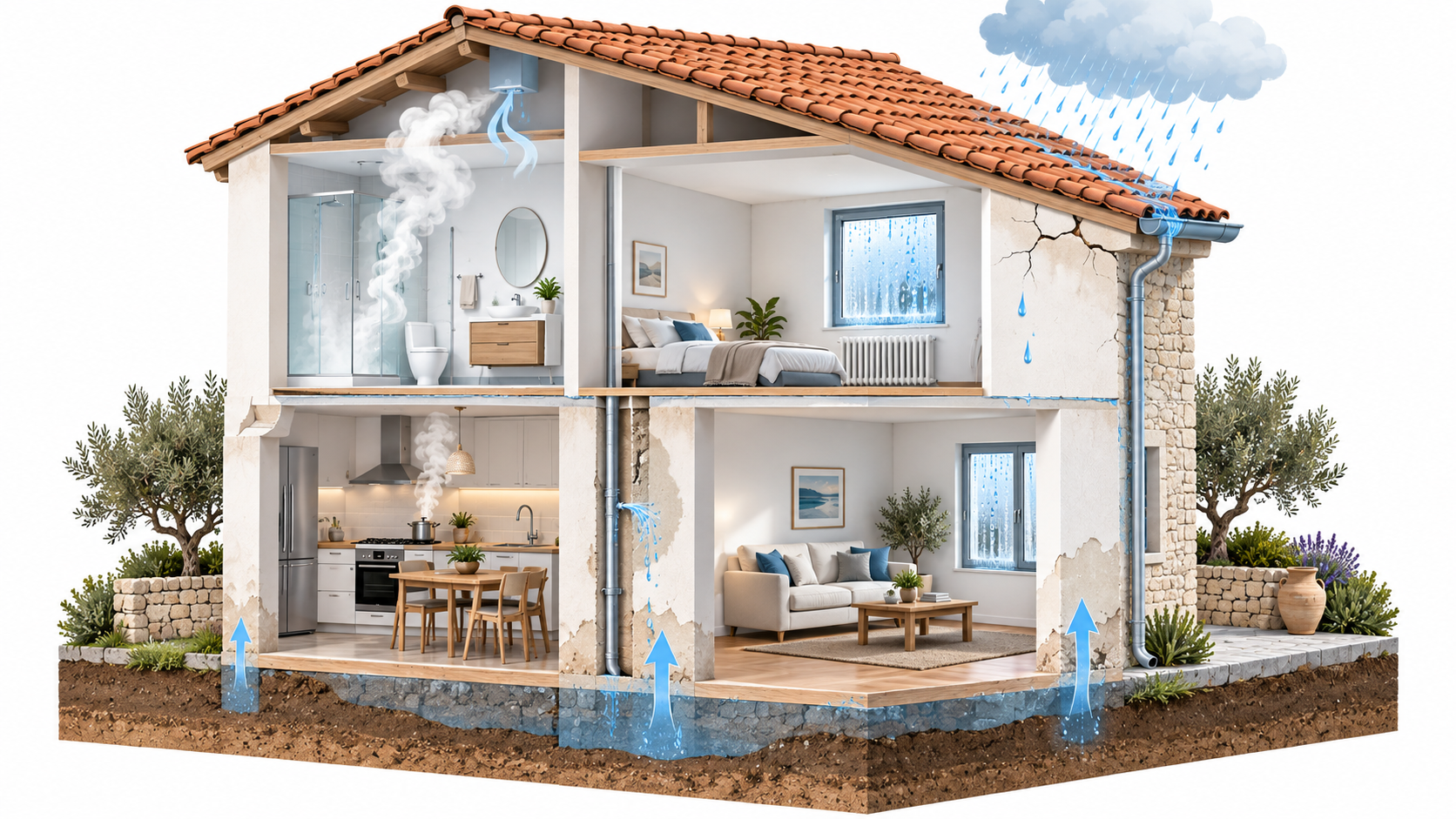
Cooking, showering, drying laundry and even breathing release large amounts of water vapour. Without adequate air exchange, such as a bathroom without an extractor or a kitchen without a hood, that vapour stays inside the home.
2. Condensation on cold surfaces
When warm, moist air meets a cold wall, window or thermal bridge, the vapour turns into water. This is why condensation and mould often appear in winter, in corners and on north-facing walls.
3. Leaks from pipes and fittings
A damaged pipe or a worn seal creates a localised patch of damp, often near bathrooms, kitchens or heating systems, which keeps growing until the leak is repaired.
4. Water infiltration from outside
Cracks in the facade, a damaged roof, blocked gutters or poorly waterproofed terraces let rainwater in. The typical sign: stains that get worse after rain.
5. Rising damp
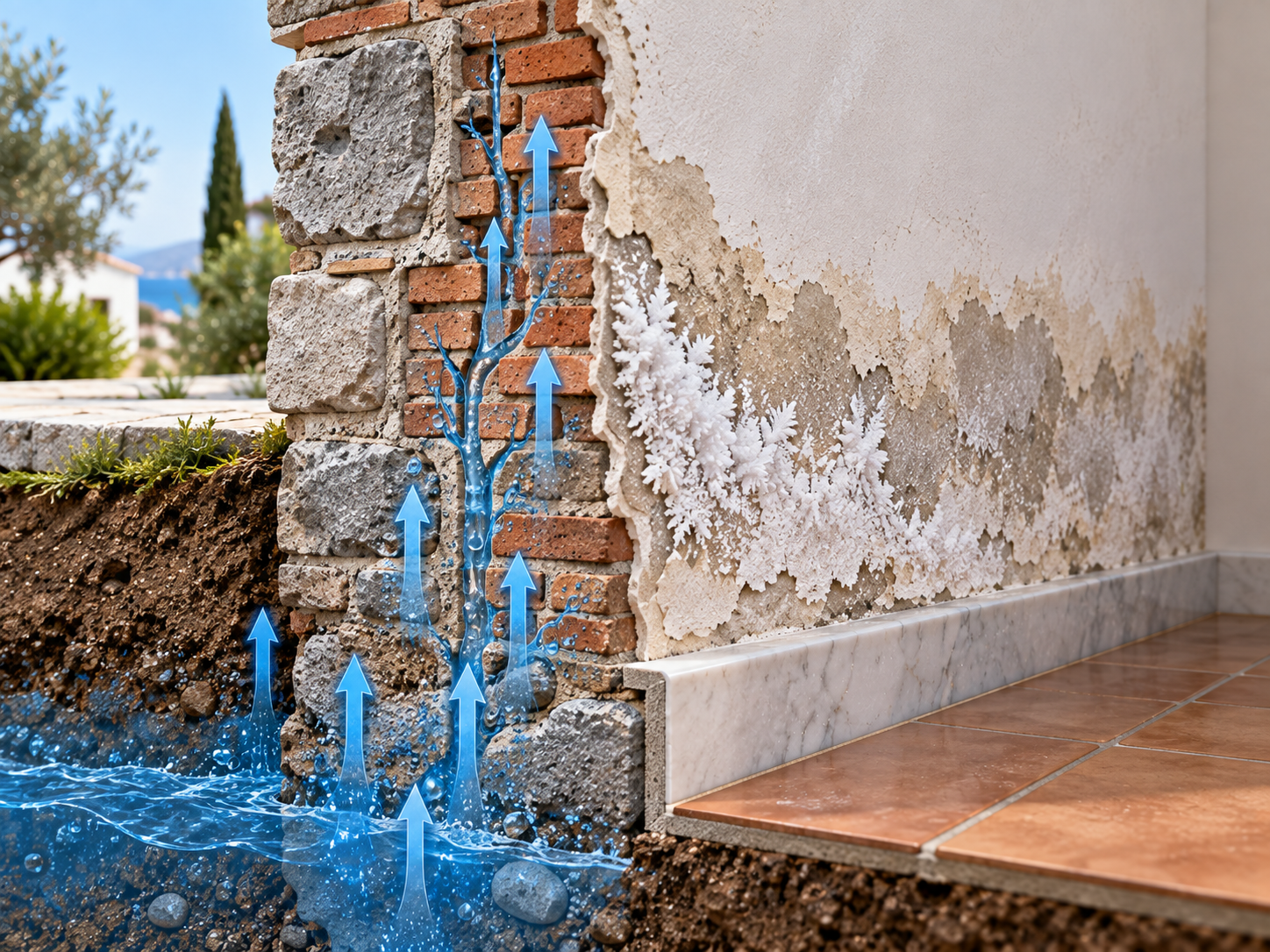
This is the most underestimated cause and the hardest to solve with traditional methods. Moisture from the ground rises through the microscopic capillary channels of brick, stone and mortar, carrying salts with it. It mainly affects ground floors, semi-basements and older buildings, and it shows up as a band of damp, stains and salt deposits along the base of the walls.
Condensation or rising damp? How to tell them apart
Identifying the right type of damp is the most important step, because the solutions are completely different.
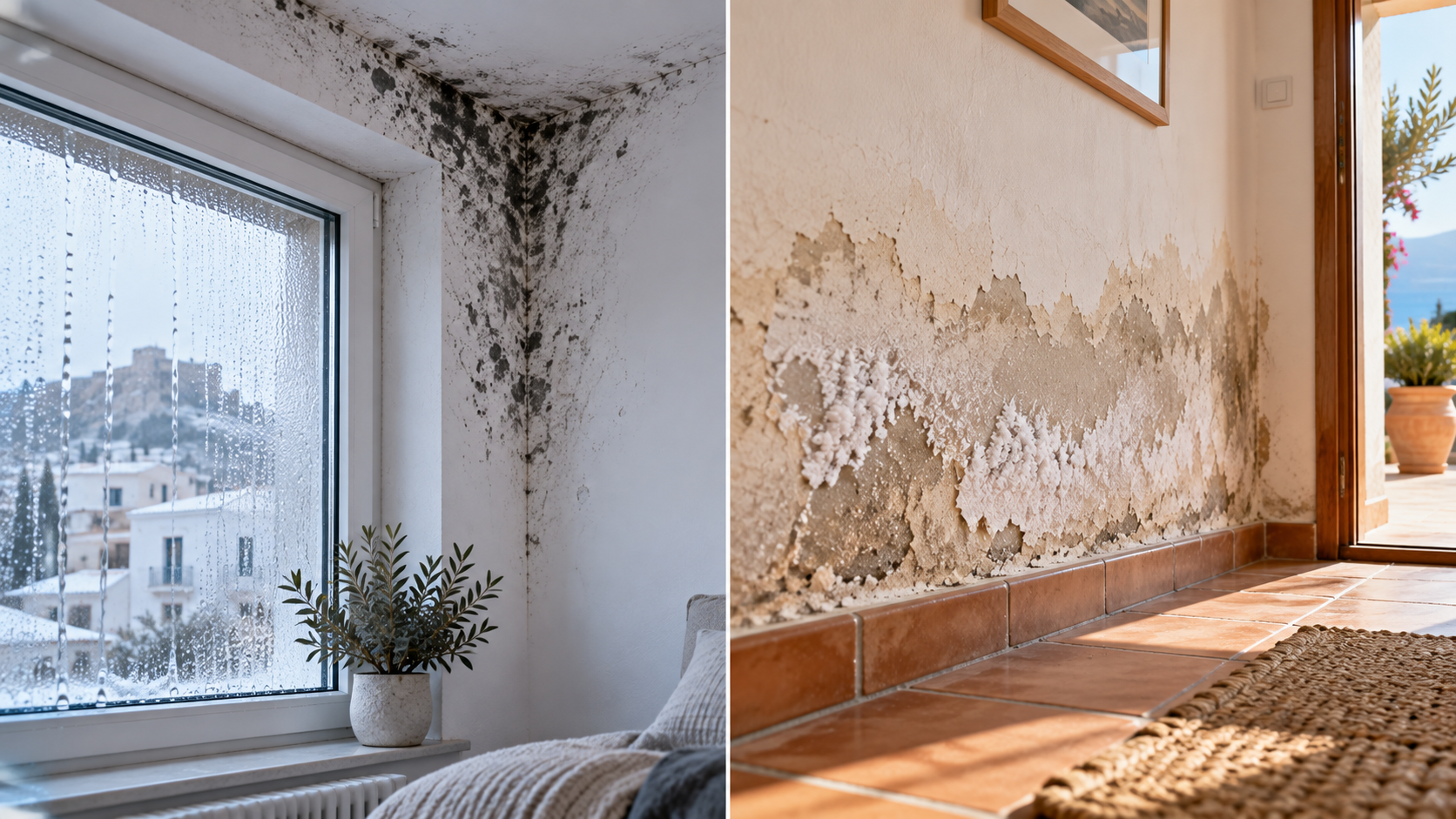
| Condensation | Rising damp | |
|---|---|---|
| Where it appears | Corners, ceilings, windows, behind furniture | Base of the walls, up to about 1–1.5 m |
| When it gets worse | In winter, when it is cold and windows stay closed | All year round, regardless of the weather |
| Typical signs | Black mould, droplets on glass | Tide mark, white salts, crumbling plaster |
| Which floors | Any floor | Ground floors, semi-basements, old buildings |
| Solution | Ventilation, heating, dehumidifier | Tackling the cause inside the masonry |
What you can do: practical solutions

- Air the rooms every day: 10–15 minutes with windows wide open is more effective than keeping them ajar all day.
- Use extractor fans in the bathroom and a hood in the kitchen, and close the door while showering or cooking.
- Keep a stable temperature: avoid leaving rooms completely unheated in winter, since cold walls encourage condensation.
- Use a dehumidifier in the most critical rooms, particularly bedrooms and rooms where laundry is dried.
- Clean mould carefully with suitable products, protective gloves and good ventilation, knowing that this treats the symptom, not the cause.
- Repair leaks and infiltration promptly: gutters, roofs, seals and cracks in the facade.
These measures are very effective against condensation. With rising damp, however, they only relieve the symptoms: the water keeps coming up from the ground and the stains return. In this case you need to act on the wall itself.
Rising damp: the Humitech solution
Traditional solutions against rising damp, such as chemical injections, cutting the walls or repeatedly replacing plaster, are invasive, costly and not always durable. Humitech takes a different approach.
Humitech is a compact electronic device that is mounted on the wall and emits very low-intensity signals. Its aim is to counteract electro-osmosis, the phenomenon that draws moisture upward inside the masonry: by reversing the polarity in the wall, water is gradually pushed back toward the ground and the walls can dry naturally.
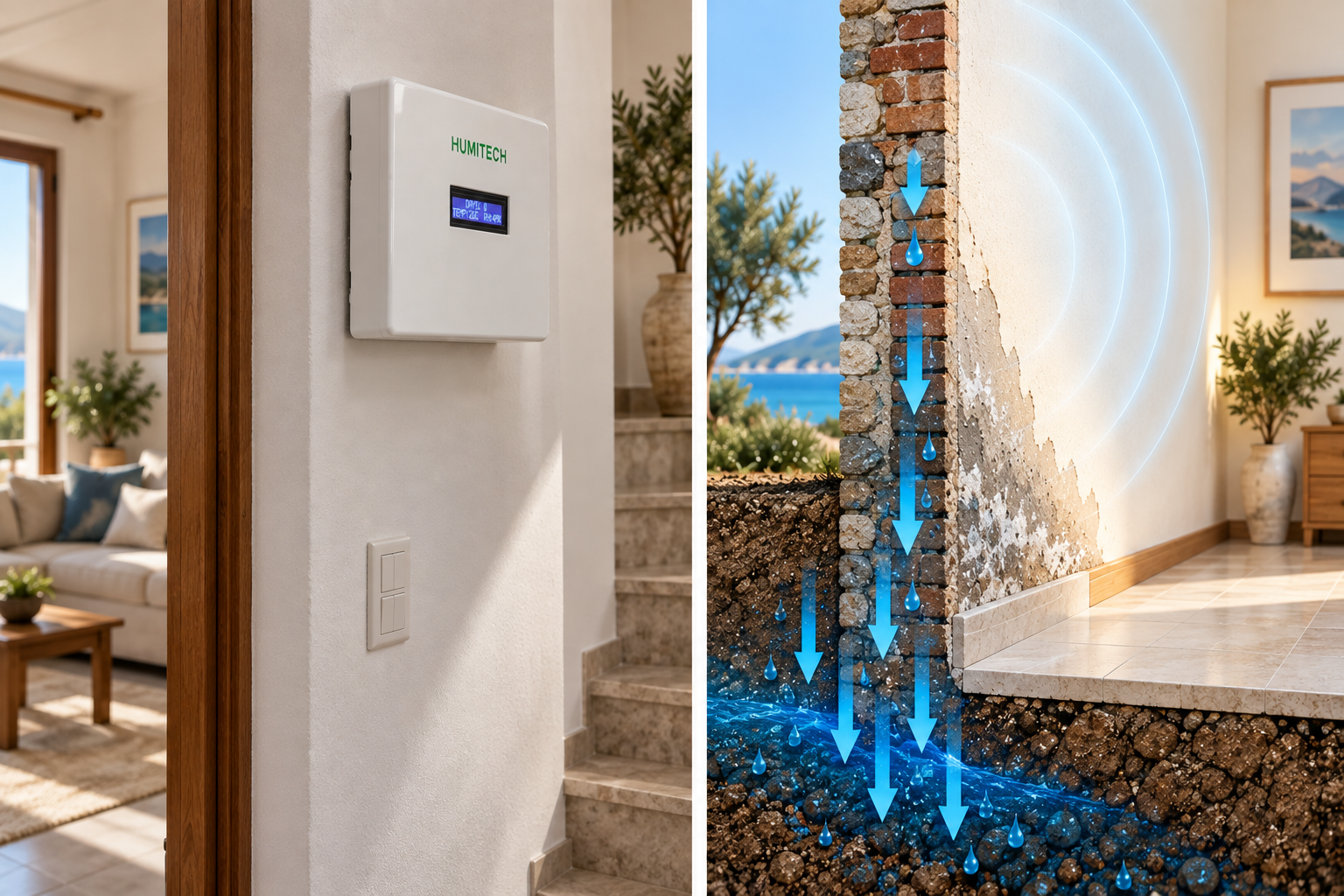
- No chemicals and no building work: no drilling, demolition or injections.
- Quick, clean installation, with no ongoing maintenance.
- Very low energy consumption: less than €1 per month.
- Suitable for homes, commercial spaces, hotels, basements and historic buildings, including churches.
- Three models for different areas: up to 70 m², up to 110 m² and up to 240 m².
Drying is gradual: the first visible results usually appear within 3–6 months, while complete drying of the walls can take up to 18 months, depending on wall thickness, materials and how much moisture has built up.
Find out more: How the technology works · The device · The models · Proven results
Common mistakes to avoid
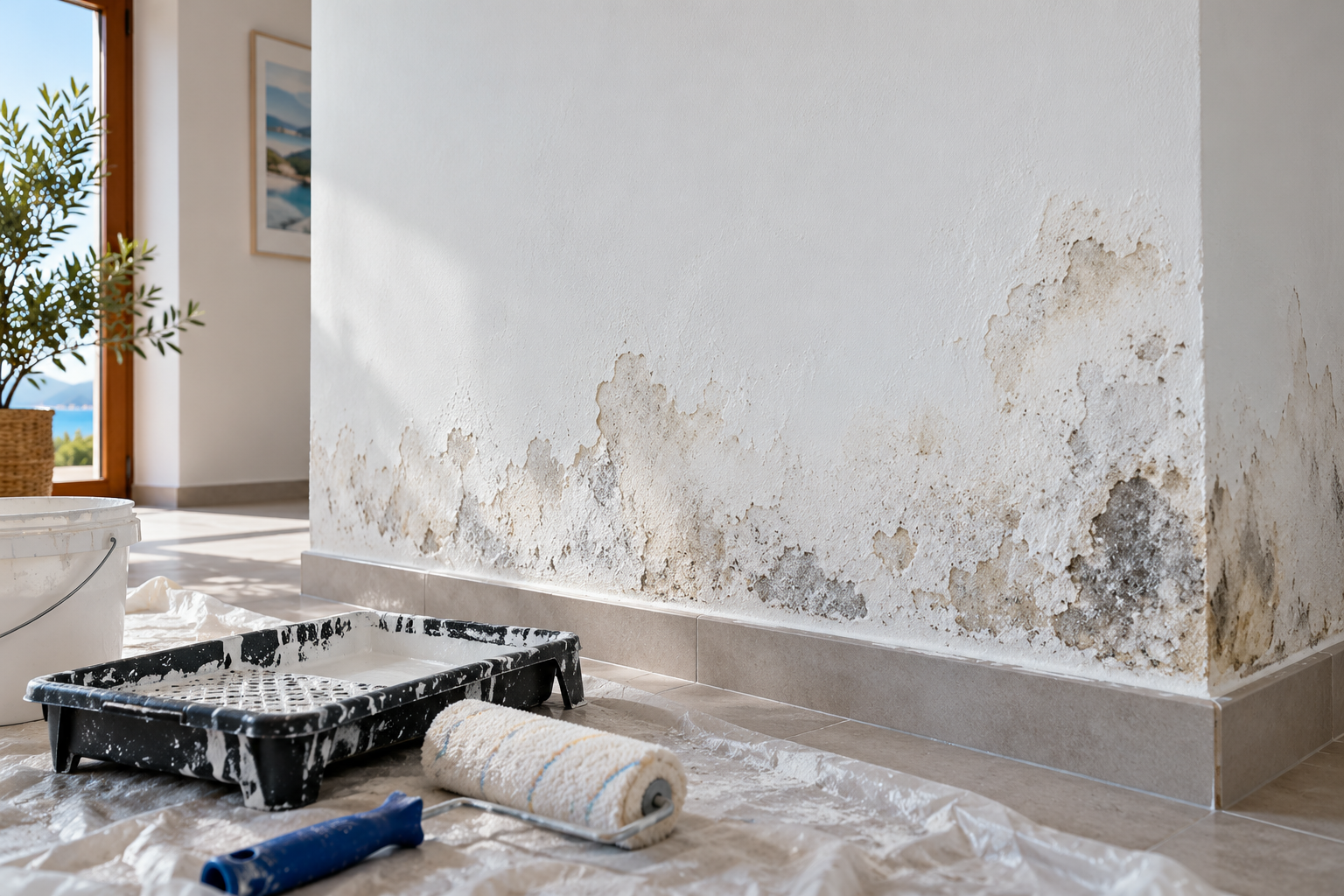
- Repainting or re-plastering without solving the cause: the stains come back within a few months, often worse than before.
- Using anti-mould paint as a permanent solution: it slows mould down but does not stop the moisture.
- Treating every type of damp the same way: a dehumidifier helps with condensation but does not stop water rising from the ground.
- Ignoring the problem because it only appears in winter: damp that returns every year keeps damaging the plaster and the structure.
Prevention: everyday habits
- Air every room daily, including bedrooms and wardrobes.
- Dry laundry outdoors or in a well-ventilated room whenever possible.
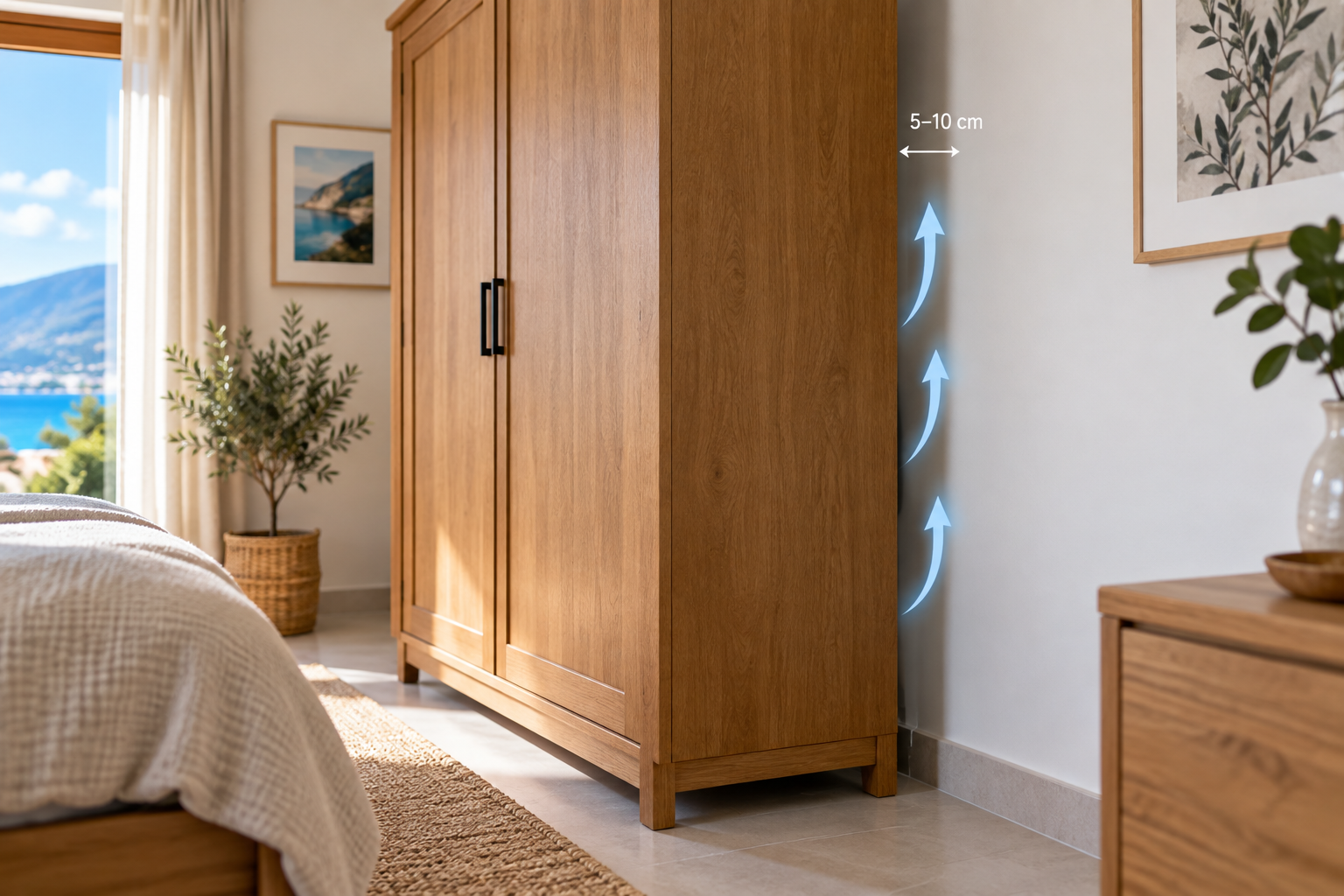
- Leave a few centimetres between large furniture and external walls so that air can circulate.
- Check gutters, roofs, terraces and window seals regularly, especially before winter.
- Keep an eye on the base of the walls on the ground floor: the first salt deposits are an early warning sign.
When to call a specialist
It is worth asking for a professional assessment if:
- mould keeps coming back after cleaning;
- plaster is swelling, crumbling or coming away from the wall;
- stains appear or get worse after rain;
- mould covers large areas of the walls or ceiling;
- there is a band of damp or white salts at the base of the walls;
- air humidity looks normal but the walls stay damp to the touch.
Frequently asked questions
What humidity level is too high in a home?
Relative humidity that stays above 60% for long periods favours mould and condensation. The ideal range is between 40% and 60%.
Is a dehumidifier enough to eliminate damp?
It helps a lot against condensation, because it removes moisture from the air. It does not solve rising damp, because the water keeps coming up from the ground inside the walls.
How can I tell if I have rising damp?
The typical signs are a band of damp and stains at the base of the walls, white salt deposits and crumbling plaster, present all year round and mainly on ground floors and in semi-basements.
Why is there more damp in winter?
Windows stay closed, the walls are colder and indoor vapour condenses on cold surfaces. This is condensation, which is different from rising damp.
Is mould dangerous to health?
Prolonged exposure to mould can worsen air quality and irritate the respiratory system, especially in sensitive people. It is best to remove it and, above all, to eliminate the cause.
How long does Humitech take to dry the walls?
The first visible results usually appear within 3–6 months. Complete drying can take up to 18 months, depending on the materials, the thickness of the walls and the amount of moisture present.
Do you have damp at the base of your walls?
Contact the Humitech team: we will help you understand the type of damp in your building and find the right solution, with no chemicals and no building work.